Aug 21, 2026Sourcing Guides
How to Choose an Electric Mosquito Swatter Supplier: A B2B Buying Guide
Learn how B2B buyers can choose an electric mosquito swatter supplier by checking product safety, battery quality, packaging, OEM support, samples, and quotation details.
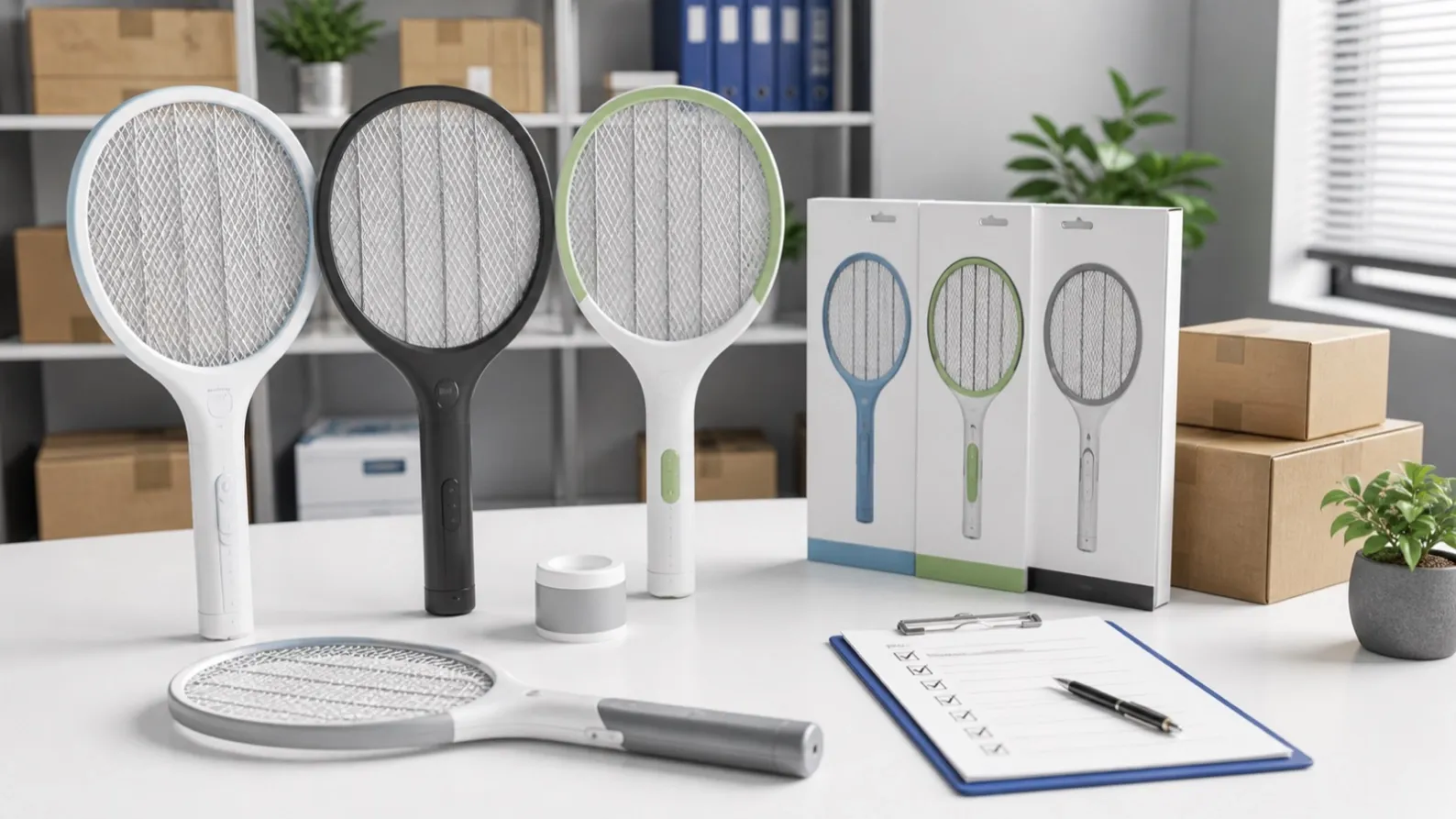
Electric mosquito swatters are seasonal, practical, and easy to understand, which makes them attractive for importers, distributors, retailers, ecommerce sellers, and promotional product buyers. They also look simple from the outside, but the sourcing decision is more detailed than choosing a shape and asking for the lowest price.
For B2B buyers, the right electric mosquito swatter supplier should help you confirm product structure, battery type, safety design, packaging, samples, customization options, and destination-market requirements before you place a bulk order. This guide explains what to check when comparing suppliers, manufacturers, and wholesale options.
If you are building a broader small appliance product line, you can also review the Products page, learn about OEM / ODM support, or send a sourcing question through the Contact Us page.
Quick Answer: What Should Buyers Check First?
B2B buyers should choose an electric mosquito swatter supplier by checking product safety, battery and charging design, mesh protection, handle quality, sample consistency, packaging options, export documentation, communication speed, and whether the supplier can support wholesale, OEM, or private label requirements.
The most important point is simple: do not approve a bulk order based only on product photos. Ask for specifications, samples, packaging details, and safety information before confirming price and production.
Why Electric Mosquito Swatters Are a Useful B2B Product
Electric mosquito swatters, also called bug zapper rackets or electric fly swatters, are common mosquito control products for homes, patios, shops, camping, and seasonal retail displays. They are usually lightweight, easy to ship, and easy for customers to understand without long product education.
For B2B buyers, they can fit several sales channels:
Buyer type | Common use case |
|---|---|
Importers | Seasonal mosquito control product line |
Distributors | Wholesale supply to retail stores and local resellers |
Retailers | Summer home, garden, and household appliance category |
Amazon sellers | Search-driven seasonal product listing |
Ecommerce sellers | Low-complexity home appliance SKU |
Promotional buyers | Branded outdoor, household, or practical gift item |
The challenge is that mosquito swatters can vary widely in battery quality, mesh structure, charging method, materials, packaging, and safety details. A supplier comparison should go beyond price.
Supplier Type: Factory, Trading Company, or Brand Partner?
When buyers search for an electric mosquito swatter supplier, they may find factories, trading companies, wholesalers, and private label partners. Each can work, but the buying process should match your business model.
Supplier type | Possible advantage | What to verify |
|---|---|---|
Factory / manufacturer | Product development, bulk production, customization | Production capability, sample quality, QC process |
Trading company | Broader product range and sourcing flexibility | Supplier network, quality control responsibility |
Wholesale supplier | Faster product availability | Packaging, stock status, export suitability |
OEM / ODM partner | Private label and product adaptation | Artwork handling, packaging support, sample approval process |
Do not assume that a factory is always better or that a trading company is always weaker. The key is whether the supplier can answer procurement questions clearly and provide stable product quality.
Product Safety Should Be the First Filter
Electric mosquito swatters use an electrified grid, so safety should be the first buying filter. Buyers should ask how the product reduces accidental contact, how the grid is protected, and what warnings or usage instructions are included.
Important safety areas include:
- Outer protective mesh structure
- Power button and activation design
- Charging protection
- Battery type and battery compartment design
- Handle insulation and grip quality
- Warning labels and manual language
- Child-safety considerations
- Storage and shipping instructions
If the product uses a rechargeable battery, buyers should also ask how the supplier controls battery quality, charging performance, and packaging for transport. Do not make certification or safety claims in your product listing until the supplier has provided the relevant documents and you have checked whether they apply to your market.
Battery and Charging Details to Confirm
Rechargeable electric mosquito swatters are popular because they are convenient and avoid frequent battery replacement. However, battery and charging details can affect customer satisfaction, shipping requirements, and compliance review.
Ask the supplier:
- Is the product rechargeable or replaceable-battery powered?
- What charging port is used, such as USB or Type-C?
- Is a charging cable included?
- What battery type is used?
- Is the battery removable or built in?
- What charging instructions are included in the manual?
- How is the charging port protected from dust or damage?
- What packaging marks are needed for battery shipment?
Avoid quoting battery capacity, charging time, or working time unless the supplier confirms exact specifications and test conditions.
Mesh Design, Frame Strength, and Handle Quality
Buyers often compare product photos first, but the physical structure matters more. A low-quality frame can bend during shipping or daily use. A weak handle can make the product feel cheap even if the electrical function works.
Check these details during sample review:
Area | What to check |
|---|---|
Mesh | Protection layers, spacing, alignment, stability |
Frame | Rigidity, edge finish, resistance to bending |
Handle | Grip comfort, switch position, material feel |
Charging area | Port alignment, cable fit, durability |
Hanging design | Hook, base, or storage hole if included |
Overall finish | Mold marks, loose parts, color consistency |
For ecommerce and retail channels, product feel can affect reviews and returns. For distributors and wholesalers, it can affect reorder confidence.
Packaging Is Part of the Product
Electric mosquito swatters are often sold in retail packaging, ecommerce packaging, or bulk carton formats. Packaging affects shelf presentation, shipping damage, barcode handling, and customer trust.
Ask the supplier to confirm:
- Retail box size
- Carton quantity
- Carton dimensions and gross weight
- Product protection inside the box
- Manual language options
- Barcode area
- Warning label placement
- Custom logo or private label packaging options
- Whether packaging artwork templates are available
For Amazon and ecommerce sellers, packaging should also be reviewed for delivery damage risk and customer unboxing expectations. For wholesalers and distributors, carton data is important for freight planning and warehouse handling.
OEM, ODM, and Custom Logo Questions
Some buyers only need a standard wholesale electric mosquito swatter. Others need custom logo, private label packaging, color changes, or model adjustments. These requirements should be discussed early, not after price negotiation.
Useful OEM / ODM questions include:
- Can the supplier add a custom logo to the handle, frame, or packaging?
- What logo file format is needed?
- Can packaging artwork be customized?
- Can the manual language be customized?
- Are color options available?
- Can the product be packed as a promotional gift set?
- What changes require tooling or extra development?
- What sample approval steps are required before bulk production?
If MOQ, tooling cost, sample fee, or lead time is not confirmed, mark it as pending instead of assuming.
Sample Approval Checklist
Samples help buyers catch problems before a bulk order. A good sample review should not only check whether the product turns on.
Checklist item | Why it matters |
|---|---|
Product appearance | Confirms color, finish, and visible quality |
Mesh structure | Checks safety design and physical stability |
Switch and activation | Confirms user operation is clear |
Charging function | Confirms cable fit and charging behavior |
Handle strength | Checks everyday use feel |
Packaging | Confirms retail or ecommerce presentation |
Manual and warnings | Checks language and buyer-market suitability |
Logo placement | Confirms custom branding position |
Carton information | Supports freight and warehouse planning |
When reviewing samples, take photos and notes. Share clear feedback with the supplier before moving to production.
Documents and Compliance Questions
Different markets have different requirements for electrical products, batteries, labeling, and packaging. Tiny Smart Home Supply should not claim a product has a certificate until that document is confirmed for the specific model and destination market.
Buyers should ask suppliers:
- Which documents are available for this exact model?
- Do the documents match the product name, model number, and factory information?
- Are battery-related documents required for shipping?
- Are warning labels and manuals suitable for the destination market?
- Does the plug, voltage, or charging accessory match the target country?
- Are product photos, packaging claims, and listing claims consistent with the documents?
For regulated markets, importers should confirm requirements with their compliance team or local consultant before ordering.
Pricing Should Not Be Compared Alone
Low unit price can be attractive, but it may hide differences in materials, battery quality, packaging, accessory inclusion, inspection standards, or after-sales responsibility.
When comparing quotations, check whether each supplier includes the same scope:
- Product model and exact specifications
- Battery and charging method
- Packaging type
- Manual and warning labels
- Logo or artwork service
- Sample terms
- Carton data
- Inspection requirements
- Export documents
- Lead time
- MOQ
If two quotations are very different, ask what is included and what is excluded. A cheaper quote is not always the cheaper total sourcing decision.
Communication Quality Is a Procurement Signal
A supplier's communication style can show how they may handle samples, production changes, packaging details, and after-sales questions. Good suppliers answer clearly, ask follow-up questions, and avoid making unsupported claims.
Positive signs include:
- Clear answers to specification questions
- Fast response to sample feedback
- Practical packaging suggestions
- Willingness to mark pending items honestly
- Clear distinction between standard and custom options
- No pressure to approve production before details are confirmed
Weak signs include vague specification sheets, unclear battery details, poor packaging information, or promises that are not backed by documents.
What Information Should Buyers Send for a Quotation?
To get a useful quotation for electric mosquito swatters, send a clear sourcing brief. A short message like "please quote" often leads to incomplete pricing.
Include:
- Target country or region
- Buyer type and sales channel
- Estimated order quantity range
- Preferred product style or size
- Rechargeable or battery-powered requirement
- Charging port preference
- Packaging type
- Manual language
- Custom logo or private label requirements
- Required documents
- Sample request
- Expected order timeline
- Delivery or shipping terms to quote against
This helps the supplier return a quotation that is easier to compare and easier to move toward a real purchase decision.
Common Mistakes to Avoid
Many sourcing issues come from unclear requirements or rushed sample approval.
Avoid these mistakes:
- Choosing only by lowest unit price
- Approving bulk production based only on photos
- Ignoring battery and charging details
- Assuming documents apply to every model
- Forgetting packaging and carton information
- Changing logo or artwork after sample approval
- Not checking manual and warning language
- Comparing quotations with different included accessories
- Asking for custom changes too late
Clear early communication reduces rework and helps both buyer and supplier avoid avoidable delays.
How Tiny Smart Home Supply Can Support Buyers
Tiny Smart Home Supply focuses on B2B smart small home appliances for importers, wholesalers, retailers, ecommerce sellers, Amazon sellers, brand owners, and promotional gift buyers. Electric mosquito swatters are part of the broader mosquito control and small home appliance product direction.
Buyers can contact Tiny Smart Home Supply to discuss electric mosquito swatter sourcing requirements, compare product options, request specifications, ask about wholesale pricing, or prepare OEM / private label questions before sampling.
To continue your sourcing process, review our Products page, check OEM / ODM options, or send an inquiry through the Contact Us page.
FAQ
What is the best electric mosquito swatter for wholesale buyers?
The best option depends on your sales channel, target country, packaging needs, battery preference, and price point. Wholesale buyers should compare product safety, mesh design, battery quality, packaging, sample consistency, and supplier communication before choosing a model.
Can electric mosquito swatters be customized with a logo?
Many electric mosquito swatter projects can include custom logo or packaging discussions, but the available options depend on the model, material, logo position, artwork file, MOQ, and supplier capability. Confirm these details with the supplier before approving samples.
What should importers ask before ordering electric mosquito swatters?
Importers should ask about specifications, battery and charging design, packaging, carton data, documents, sample approval, destination-market requirements, MOQ, price scope, lead time, and whether the quotation includes custom logo or packaging work.
Are rechargeable electric mosquito swatters better for ecommerce sellers?
Rechargeable models can be attractive because they are convenient and easy to explain in product listings. Ecommerce sellers should still confirm battery quality, charging port, included cable, packaging protection, warning labels, and shipping requirements before ordering.
Why should buyers request samples before bulk production?
Samples help buyers check product appearance, mesh protection, handle strength, charging function, packaging, manual language, logo placement, and overall quality. Sample review reduces the chance of finding avoidable problems after the bulk order arrives.